PolyFoam Solutions Logo Syracuse Utah

PolyFoam Solutions

Call 385-396-5083 Schedule Free Consult
  • Home
  • Concrete Repair
    • Concrete Lifting
    • Concrete Leveling
    • Concrete Driveway Repair
    • Concrete Crack Repair
    • Concrete Trip Hazard Repair
    • Foundation Crack Repair
    • Concrete Basement Wall Repair
    • Sidewalk Leveling
    • Concrete Garage Floor Leveling
    • Concrete Joint Sealing
    • Foundation Leak Sealing
    • Concrete Porch Repair
    • Concrete Stoop Repair
    • Soil Stabilization
  • Our Process
    • Mudjacking Vs Polyfoam
  • Pricing
    • Financing
  • Projects
  • Testimonials
  • About
    • Service Area
    • Blog
  • Contact

Spray Foam for Foundation Repair: A Modern Solution for Stability

Home | Archives for Samson Rollins

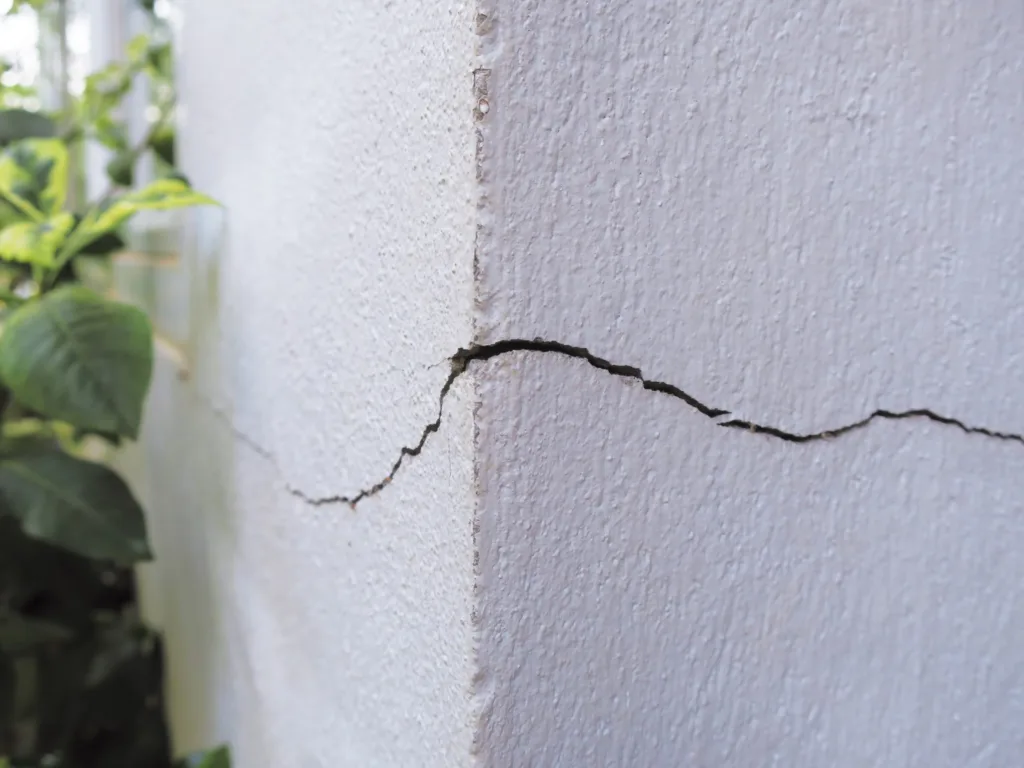
A strong foundation is necessary for maintaining a safe, comfortable, and stable home. However, cracks in the walls and uneven surfaces can indicate issues with your building’s foundation. Have you considered spray foam for foundation repair?
spray foam for foundation repair

When thinking of ways to fix an unstable foundation, foam might not be the first thing that comes to mind. Some kinds of foams though have the chemical makeup to provide excellent results that last for a long time, like polyurethane foam.

If you have noticed issues in your house’s foundation, here are some things to consider before beginning repairs.

Understanding Foundation Problems

To understand the best solution, it’s important to know what causes the problem in the first place. Over time, the soil under foundations of buildings can shift, erode, and wear away. This happens as a result of weather conditions, loose ground, poor drainage, or natural settling.

Then dense slabs of hard materials, like concrete and asphalt, that sit on top of this soil shift along with the ground. Even foundations that are cured and reinforced to prevent cracking are liable to shift with the dirt. This can cause uneven floors, cracked walls, and damaged foundations.

To ensure safety, it’s best to address the issue as soon as you notice some of the common signs.

How Spray Foam Works

You don’t need to worry about fully replacing your foundation or investing in expensive engineering repairs; using spray foam for foundation repairs could actually save you a lot of money and be a quick solution.
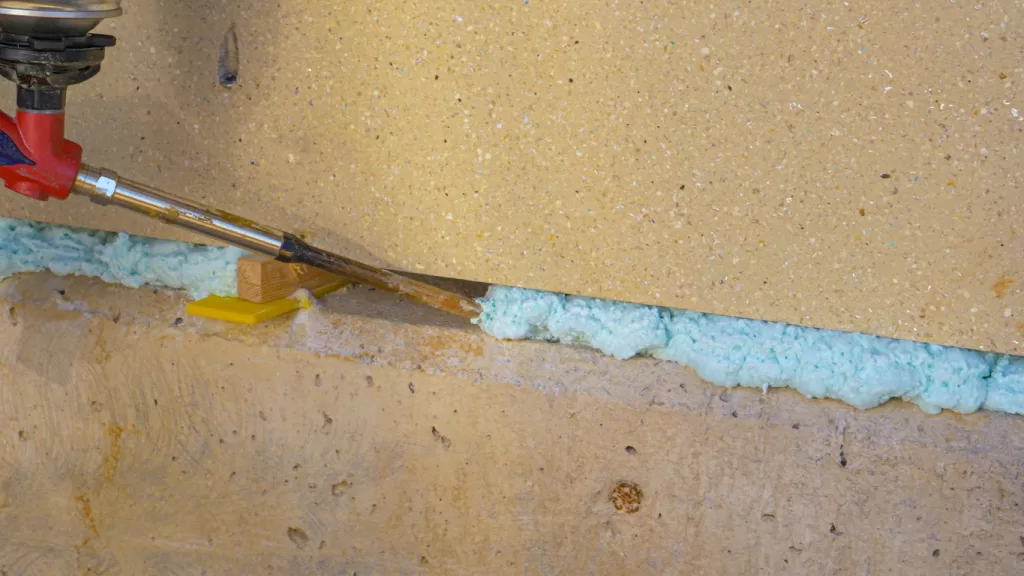
using spray foam for foundation repair

Polyurethane foam, or polyfoam, uses a chemical reaction that reacts with moisture and makes long bonds. The bonds make the solution expand and fill the space, easily allowing it to fill in holes, gaps, and cracks with a hardened substance.

When you hire a professional company, like PolyFoam Solutions, to use spray foam for foundation repairs, you can expect the following process:

  1. Assessment – To understand how to best proceed for the best solution, technicians will initially assess your foundation and identify cracking, gaps, and holes.
  2. Injection – Then they will inject the polyurethane foam into the gaps using a minimally invasive process.
  3. Expansion – As the foam undergoes a chemical change, it will rapidly expand and harden, creating a solid, waterproof material. This will help to boost your house’s foundation, fill in cracks, and protect against moisture.
  4. Final Inspection – A final look-over is then performed to ensure the best, most long-lasting results.

Benefits of Using Spray Foam for Foundation Repair

Using spray foam for your foundation repair provides you with an effective solution without eating up your time or hurting your budget.

  • Non-Invasive Process – While other repair methods may need to remove huge portions of your foundation or create large holes, spray foam uses minimal digging or heavy equipment so your property receives hardly any damage.
  • Quick Installation – The repairs often only take 1-2 hours to complete, meaning you can return to your daily life promptly.
  • Durability – Because the foam is water-resistant and doesn’t degrade, the results are both sturdy and long-lasting.
  • Eco-Friendly – Polyurethane foam is often more environmentally friendly than other foundation repair options, like concrete-based solutions.
  • Cost-Effective – Using spray foam for foundation repair requires minimal labor and minimal materials. That means that polyfoam can be up to 50% cheaper than other kinds of repair.
spray foam for foundation repair

When to Consider Spray Foam for Your Foundation

If you are noticing signs, such as cracks in the walls, doors or windows that don’t close properly anymore, or uneven floors, then it’s time to call the professionals at PolyFoam Solutions. Leaving the damage unaddressed can lead to more structural damage and expensive costs down the road.

Don’t worry about your daily life being disrupted or your foundation getting ruined in the repair process. You can trust that polyfoam will leave your foundation feeling like new and get you back to your everyday life in no time. If you’re wanting to save money and take care of your house, then it’s best to go with spray foam for foundation repair.

Choose a Trusted Expert for Spray Foam Foundation Repair

At PolyFoam Solutions, we want our customers to get results they want without needing to empty their wallets. We have saved Utah residents hundreds of thousands of dollars in repair costs, just by going with our service. Not only is our polyfoam cheap and effective, but it also improves the quality of foundations, driveways, porches, and sidewalks so they can be safely used for years to come.

If you are needing high-quality foundation repair that lasts, reach out to us today!

Filed Under: Concrete Repair

Curious as to the science behind polyfoam? This cheap, strong, and effective substance has improved a wide range of inventions, all from a chemical reaction.

At PolyFoam Solutions, we use the science of polyfoam to help improve your home, business, and property. Let’s get into the details of what polyfoam is, how it works, how it’s used, and why it’s such a great invention.

science behind polyfoam

What is Polyfoam?

There are three main types of what is generally categorized as “polyfoam”:

  • Polyurethane
  • Polyethylene
  • Polystyrene

Polyurethane tends to be the most common, used for a variety of structures, materials, and products. Polyurethane foam, or polyfoam, can be produced from a few different ingredients, resulting in different chemical structures and therefore, many different uses.

The differing chemical makeups means that the polyfoam can be used in both flexible and rigid products, some of which include coatings, adhesives, electrical potting compounds, and fibers like spandex.

Foam, though, is the most common product of polyurethane, accounting for 67% of all polyurethane production in 2016.

A Chemical Reaction

Polyfoam is produced when two main ingredients mix and react. These ingredients consist of polyol, a type of alcohol, and an isocyanate, which is a reactive chemical. These chemicals are then mixed in a process called polymerization.

When polyol and isocyanate mix, the reaction makes them connect together and form long chains of urethane bonds, which results in a strong and flexible substance. It then quickly changes the chemicals from the liquid state into a hardy solid material.

Because polyfoam expands and fills a space quickly before it hardens, it can easily be moulded into various shapes and forms without the need for detailed cutting.

To create the foam, additives and blowing agents can be added to create air bubbles and increase flexibility. Blowing agents, like water, will react with the isocyanate and release carbon dioxide, allowing for tiny bubbles to form.

Flexible Polyfoam

Flexible polyfoam is used all the time in many products that you may even use daily. Some of the most common uses are:

science behind polyfoam
  • Furniture
  • Acoustic Insulation
  • Bedding
  • Automotive Seating
  • Athletic Equipment
  • Packaging
  • Footwear
  • Carpets
  • & More

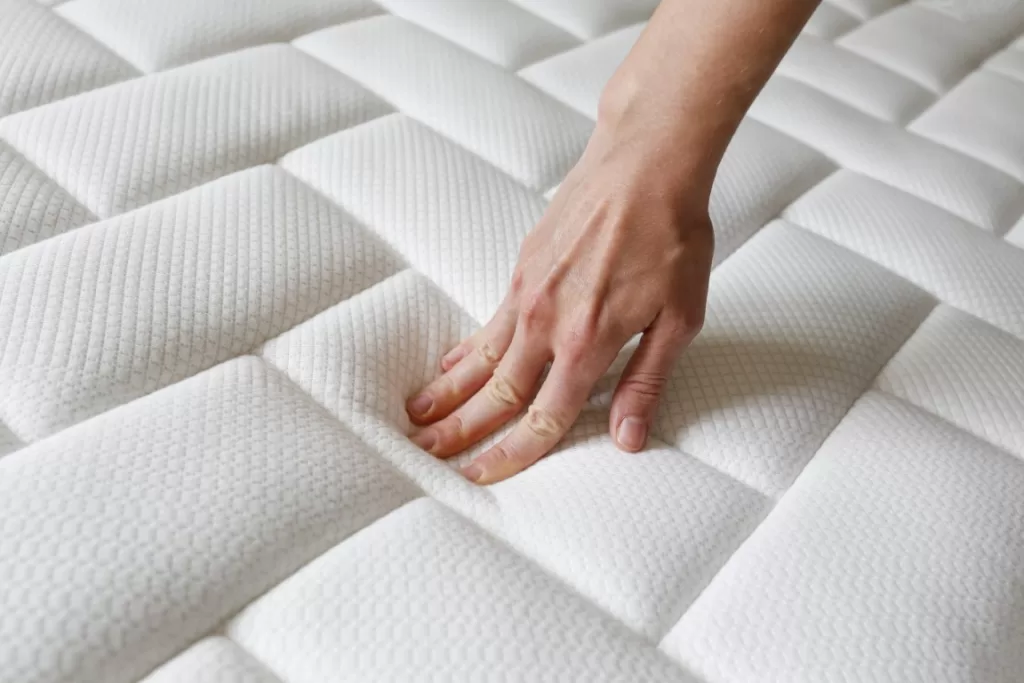
Because flexible polyfoam is built to compress and spring back, it is often used in items that are designed to be comfortable, soft, and supportive.

Rigid Polyfoam

Rigid polyfoam, on the other hand, is extremely useful for creating sturdy and durable surfaces that are effective and lightweight.

  • Building Insulation
  • Refrigeration
  • Construction Application
  • Fire-Retardant Parts
  • Helmet Liners
  • & More

Due to its chemical makeup, rigid polyfoam is strong, moisture-resistant, and heat transfer-resistant, allowing it to be used for a wide range of applications.

science behind polyfoam

Science Behind PolyFoam Solutions

At PolyFoam Solutions, we harness the science behind polyfoam and make use of it for our services. Here’s how polyurethane is utilized at our company:

1. Concrete Lifting & Leveling

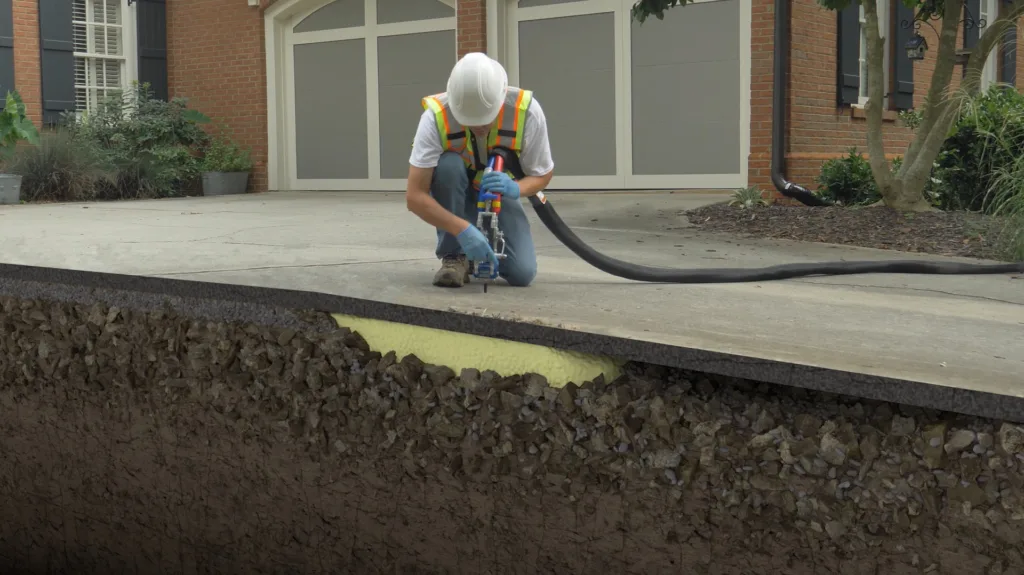
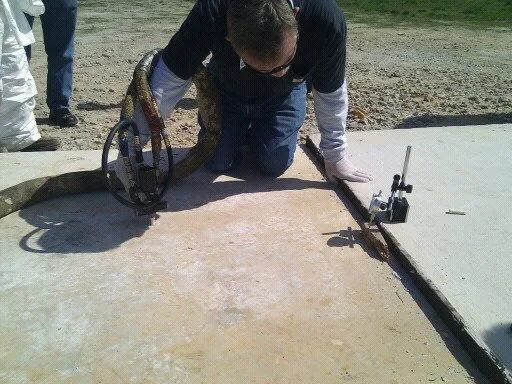
We inject expanding polyurethane foam beneath uneven or sunken concrete slabs, which allows for the surface to be adjusted so it’s even. Since polyfoam fills the gaps, this can create a stable foundation for walkways and driveways.

2. Foundation Repairs

Our company addresses structural integrity issues, like in home foundations, by injecting polyfoam into cracks and gaps. The expanded and solidified foam helps to offer strength and support.

3. Void Filling

Cracks, gaps, and grooves in concrete and cement can affect the safety and visual appeal of surfaces. We use polyfoam to fill in these spots and prevent further settling or damage

4. Soil Stabilization

Soil that hasn’t been properly compacted can lead to loose ground and unstable foundations. Injected polyfoam can help to solidify and stabilize the ground to ensure safety.

5. Concrete Surface & Joint Sealing

slab lifting

At PolyFoam Solutions, we also use polyurethane sealants to protect concrete surfaces and joints from spills, moisture, and environmental factors.

Why Choose PolyFoam

Using polyurethane solutions for your property has substantial benefits, including:

  • Durability: The science behind polyfoam allows it to produce long-lasting repairs and solutions.
  • Minimal Disruption: Because it only requires a small entry hole, polyfoam injection can be effective with minimal mess and a quicker completion.
  • Cost-Effectiveness: Polyurethane is about 70% cheaper than replacing concrete slabs, so you can have results that last.

If you have been looking for a solution for your concrete, choose PolyFoam Solutions! Utilizing the science of polyfoam allows us to offer customers quick, easy, and affordable solutions. Don’t waste time and money on fully replacing and releveling the ground.

Instead, reach out to us today to get your polyfoam solution!

Filed Under: Concrete Lifting

concrete settlement polyfoam solutions

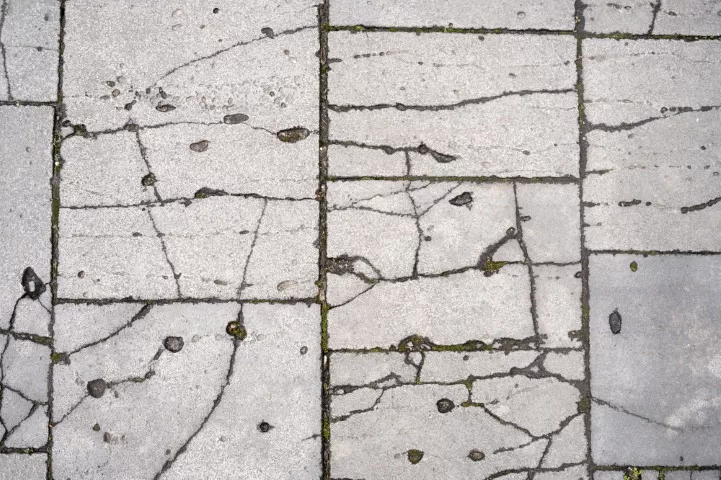
Cracks in concrete and uneven pavement are common occurrences that are caused by concrete settlement. But just because you have a concrete patio or driveway does not mean that these disruptions are inevitable.

There are a few main causes of concrete settlement and cracking that can be easily prevented and maintained so your concrete can look smooth and complete.

1. Soil Erosion

Over time, the soil under your concrete may shift and be worn away due to the changing of the weather. As water from rain, snow, and ice settle under your concrete slabs, they can begin to erode the soil away. This is especially likely from heavy rainfall, poor drainage, or plumbing leaks.

As the soil underneath begins to shift and erode, then your concrete does not have as much evenly distributed support to remain even and it can lead to gaps, cracks, or an imbalanced surface.

2. Tree Roots

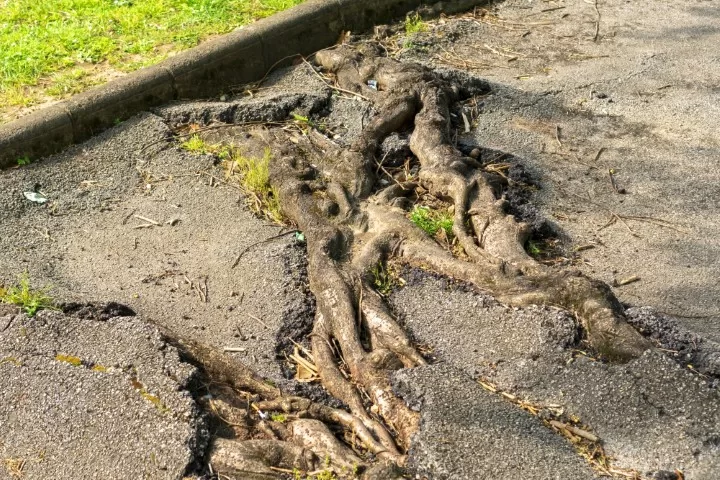
Though everyone loves the look and feel of having trees around your property, they should be monitored and maintained to ensure they don’t cause problems in your concrete. As their roots grow and seek water underground, they can push up dirt and concrete, leading to damaged slabs. 

concrete settlement polyfoam solutions

3. Heavy Loads

Though concrete seems to be quite durable, it can sometimes buckle under the pressure of heavy loads. Any heavy equipment, vehicles, or structures can slowly push down the concrete and cause it to sink and settle into the ground. This means that those areas can become uneven and broken, ruining the concrete.

4. Shrinking & Expansion

Oftentimes, soil will shrink and expand, often due to temperature changes throughout the year. If there is moisture in the ground, any heat will cause the soil to expand, pushing up anything on top of it. When it gets colder, the moisture will make the dirt shrink. Especially during months where there are big temperature fluctuations between day and night, this can lead to rapid movement in the earth.

Any concrete on top of the shifting soil can then easily break apart, lift up, and sink as it adjusts with its foundation.

5. Poor Soil Compaction

If soil doesn’t have the proper compaction before concrete is laid on top, then this means an insecure foundation. It’s more prone to shrinking, expansion, and other movement if it has not been made compact enough. To prevent unwanted concrete settlement, you should have a solid foundation underneath.

Preventions

Though concrete settlement is undesirable, there are certain preventative measures that can be taken to help reduce the chances of damaged concrete.

concrete settlement polyfoam solutions
  1. Improve Drainage
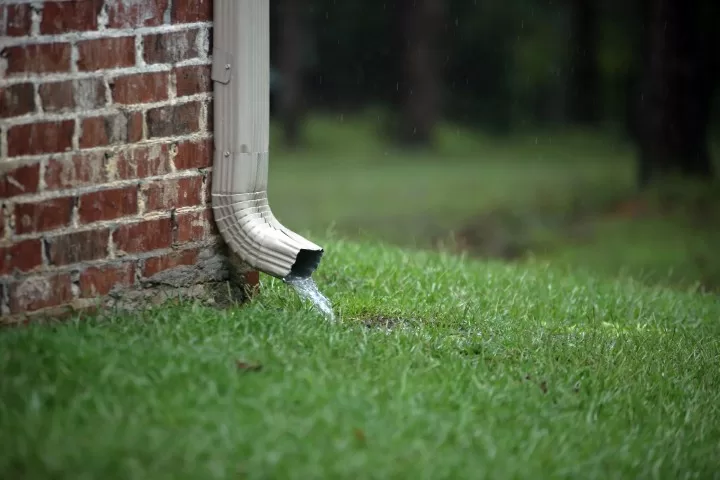
    If you have problems with flooding around your concrete, then you may want to consider a better drainage system on your property to prevent erosion. Gutter and downspouts can help redirect water away from your concrete so it doesn’t impact the soil underneath.
  2. Control Tree Growth
    To help reduce the impact of tree roots, it’s best to try to plant new trees further away from your house, patio, and driveway. You may also want to install root barriers to keep them from growing toward or around concrete structures.
  3. Limit Heavy Loads
    If you are storing heavy equipment or vehicles, it’s best to store them properly instead of directly on your concrete slabs. Try to store them indoors, if possible, or use proper ground protection or protective covers, like cribbing, that will help to give proper support for the weight without damaging your concrete.
  4. Choose the Right Soil
    Some kinds of soil are better for maintaining your concrete. Crushed stone or sand are more durable and stable, allowing for drainage without impacting your concrete. Avoid softer materials, like clay-based soils, to minimize shifting or movement.
  5. Thoroughly Compact Soil
    Before laying your concrete, you will want to ensure that your soil is properly compact to provide the most supportive foundation for your concrete. A well-compacted soil will help to minimize concrete settlement.
  6. Concrete Lifting
    Another way to protect and maintain your concrete is through concrete lifting. This process facilitates polyurethane foam, which expands and hardens into a durable and water-resistant resin. Polyfoam can then be used to fill in gaps and offer support for your concrete to keep a smooth, even surface.
Concrete-leveling-foam

The Best Preventative Care

To best deal with concrete settlement, contact PolyFoam Solutions for a cost-effective and long-lasting solution. It is minimally invasive and a fast, easy process that saves you the headache of full concrete replacement. Reach out to us today to get your concrete back to new!

Filed Under: Concrete Lifting

  • 1
  • 2
  • 3
  • 4
  • Next Page »

Hours

PolyFoam Solutions

385-396-5083
Monday 8 AM to 6 PM
Tuesday 8 AM to 6 PM
Wednesday 8 AM to 6 PM
Thursday 8 AM to 6 PM
Friday 8 AM to 6 PM
Saturday 8 AM to 6 PM
Sunday Closed

Directions

Follow Us

2026 | PolyFoam Solutions | All Rights Reserved | Privacy Policy | Terms | Accessibility Statement | Anti Discrimination Disclaimer | XML Sitemap | Sitemap | Site by PDM